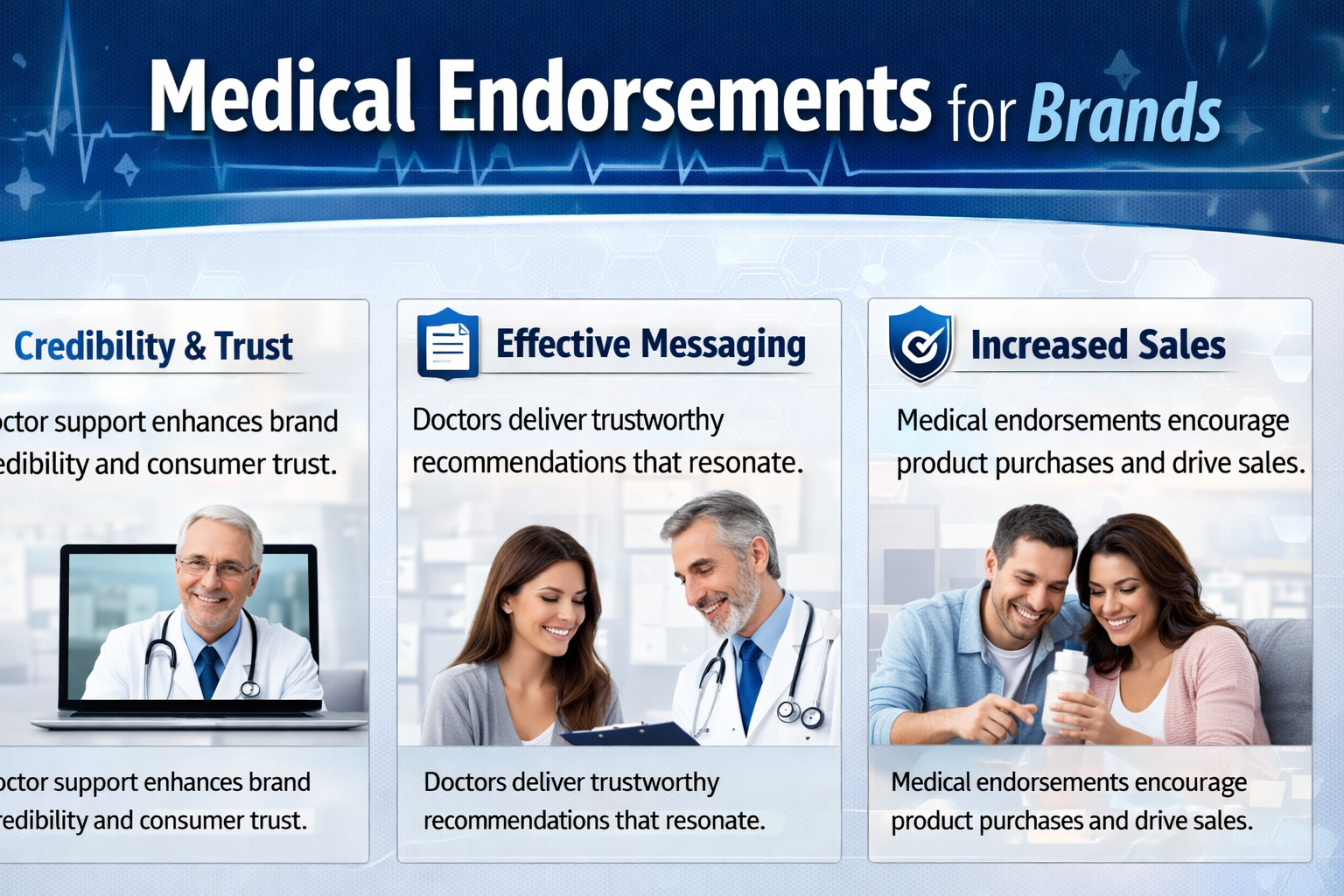
In highly competitive markets, brands are constantly searching for stronger ways to earn customer trust. Advertising alone is often no longer enough, especially when products are connected to health, skincare, wellness, nutrition, hygiene, personal care, or physical comfort. Modern consumers want reassurance before they buy, and one of the strongest forms of reassurance comes from expert approval. This is why Medical endorsement services for brands have become an important strategy for brands that want to appear more credible and trustworthy.
A medical endorsement happens when a licensed doctor or healthcare professional reviews a product and provides a professional opinion about it. For customers, this immediately adds authority because doctors are seen as reliable experts who understand safety, usefulness, and practical value. Even a short statement from a qualified medical professional can influence how people view a product.
For brands, this type of support is not just about promotion—it is about building confidence in a way that feels more authentic than ordinary marketing.
Why Brands Use Medical Endorsements
Customers today make careful buying decisions. Before purchasing, they often compare products, read reviews, and search for signs that a product is trustworthy.
A doctor’s endorsement creates a stronger impression than standard advertising because it introduces professional validation. People often believe that if a doctor is willing to support a product, then the product likely has real value.
This is especially effective for products related to skincare, supplements, posture support, oral care, hygiene tools, recovery products, wellness accessories, and health-related consumer goods.
For new brands, medical endorsements can also help reduce one of the biggest challenges in business: convincing people to trust a product they have never used before.
The Importance of Choosing the Right Doctor
A successful endorsement depends heavily on relevance.
The doctor involved should have expertise connected to the product category. A dermatologist fits naturally with skincare products. A nutrition expert is more suitable for supplements or food-related wellness products. Orthopedic specialists work well for posture devices, support products, and mobility tools.
Customers notice this connection immediately. When the doctor’s field matches the product naturally, the endorsement feels genuine.
A mismatch can weaken credibility, even if the doctor is highly qualified.
How Brands Usually Arrange Medical Endorsements
Some brands contact doctors directly, while others use professional endorsement services that connect businesses with medical professionals.
Specialist services often make the process easier because they already understand how medical endorsements should be handled professionally.
These services usually help brands by:
- Identifying suitable doctors
- Presenting the product clearly
- Managing communication
- Coordinating reviews
- Structuring agreements
- Ensuring legal clarity
For brands that are new to this process, professional support often saves time and avoids mistakes.
Why Product Quality Matters First
A doctor will not usually endorse a product simply because payment is offered.
Medical professionals protect their reputation carefully, so they usually review whether the product has genuine practical value.
This means brands should prepare proper product information before requesting endorsement.
Doctors often want to understand:
- What the product does
- Who it is designed for
- What ingredients or materials are used
- Whether claims are realistic
A product that is clearly presented usually receives better professional attention.
Written and Video Endorsements
Brands use medical endorsements in different formats depending on marketing goals.
Written endorsements are common for websites, product pages, brochures, and educational content. A short professional quote often works very effectively because it fits naturally into product descriptions.
Video endorsements create stronger emotional trust because customers can see and hear the doctor directly.
Some brands also use expert interviews where doctors explain product value in a more educational way. This often feels less promotional and more trustworthy.
Legal and Ethical Responsibility
Medical endorsements must always remain truthful.
Doctors cannot make unsupported claims or guarantee unrealistic results.
Brands should also obtain written permission before using a doctor’s name, professional title, image, or statement publicly.
If the endorsement is paid, many markets require clear disclosure so customers understand that the doctor participated professionally.
Legal clarity protects both the doctor and the business.
Why Medical Endorsements Build Long-Term Trust
Medical endorsements do more than improve short-term sales.
They also strengthen long-term brand reputation.
When customers repeatedly see that a brand works with qualified professionals, they begin to associate that brand with higher standards and stronger reliability.
This often leads to stronger loyalty, better brand recall, and easier future product launches.
Authenticity Works Better Than Promotion
The strongest endorsements sound natural.
A doctor does not need dramatic language to influence customers.
Simple statements explaining that a product supports comfort, improves convenience, or offers practical daily value usually create more trust than exaggerated praise.
Customers respond better when endorsements feel honest and professional.
Final Thoughts
Medical endorsements for brands have become one of the most effective trust-building tools in modern product marketing.
When the right doctor supports the right product in a professional way, brands gain credibility that ordinary advertising often cannot achieve.